
Marketing is an investment, not an expense
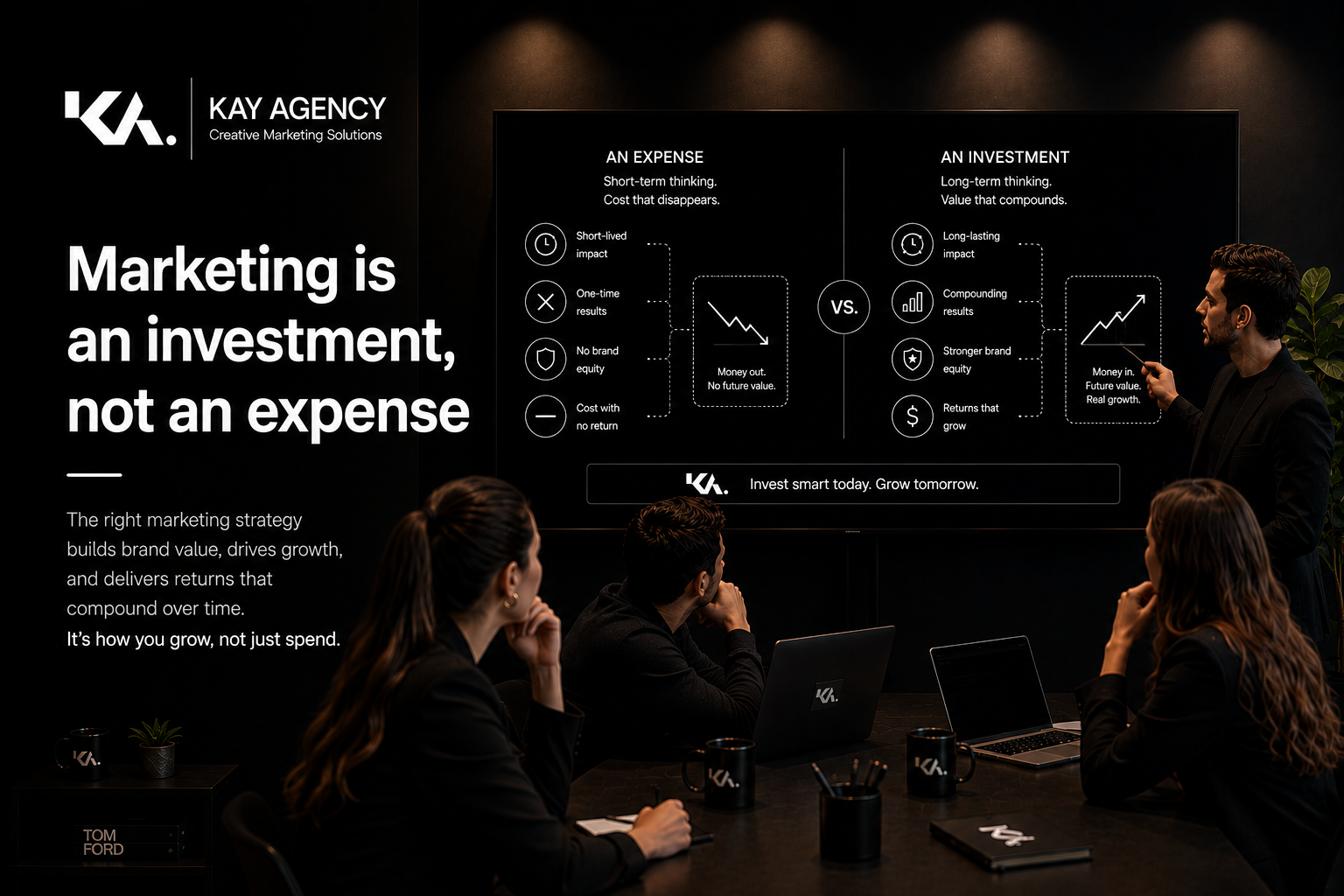
Every successful business begins with a vision. Marketing is what turns that vision into visibility, trust and growth.
The framing problem
Marketing shows up on a profit and loss statement next to rent and utilities, and that placement quietly shapes how it gets treated. Costs are things you cut when the quarter is tight. Investments are things you protect.
Every successful business begins with a vision. Marketing is what transforms that vision into visibility, trust, growth and lasting impact — it is the bridge between a great product and the people it is meant to serve.
What changes when you treat it as an investment
Investments get a thesis, a time horizon and a measure of return. Applied to marketing, that means agreeing up front what the spend is supposed to move, over what period, and how you will know.
It also changes the questions in the room. Instead of asking what a campaign costs, you start asking what it is expected to return and what happens to that return if you stop.
Where the discipline comes from
The discipline is not in the creative. It is in the reporting underneath it — attribution that holds up, dashboards that show the whole funnel, and honest audits when something is not working.
That is the difference between spending on marketing and investing in it.